
Developed trail
Pray for Proxima
Prayer Updates invite people into what God is doing, help them pray with us, and give us an opportunity to listen.
Stage 1 of 7
Purpose
Why are we doing this?
We share a Prayer Update when something meaningful invites people to pray with us—not simply because another month has passed.
Stage 2 of 7
Message
What are we saying?
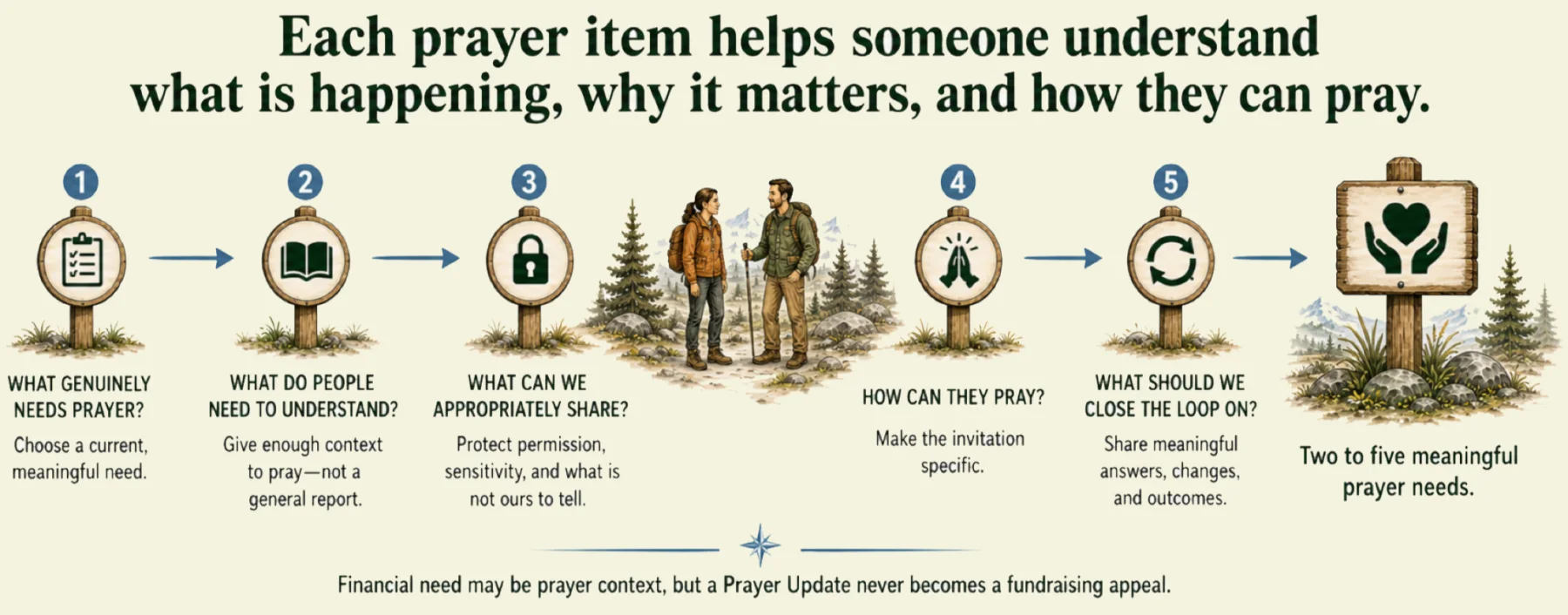
Each prayer item helps someone understand what is happening, why it matters, and how they can pray.
| We ask | What it helps us do |
|---|---|
| What genuinely needs prayer? | Choose a current, meaningful need. |
| What do people need to understand? | Give enough context to pray—not a general report. |
| What can we appropriately share? | Protect permission, sensitivity, and what is not ours to tell. |
| How can they pray? | Make the invitation specific. |
| What should we close the loop on? | Share meaningful answers, changes, and outcomes. |
We normally share two to five meaningful prayer needs. Financial need may be prayer context, but a Prayer Update never becomes a fundraising appeal.
Stage 3 of 7
People
Who is this for, right now?
We invite people who have chosen Prayer Updates or already share an established prayer relationship with Proxima.
Relevance tells us who may care. Their communication choices still govern whether and how we reach them.

Stage 4 of 7
Delivery
How and where does it reach them?
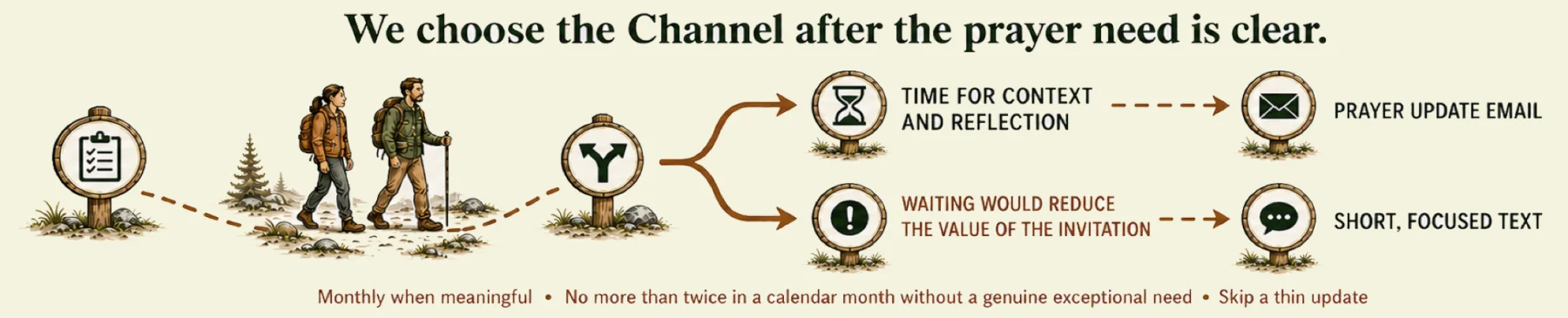
We choose the Channel after the prayer need is clear.
| Prayer need | How we share it |
|---|---|
| There is time for context and reflection | Prayer Update email |
| Waiting would reduce the value of the invitation | Short, focused text |
Normal updates are monthly when the content is meaningful and no more than twice in a calendar month without a genuine exceptional need. We skip a thin update. Urgency never overrides someone's communication choices.
Stage 5 of 7
Reaction
What did they do?
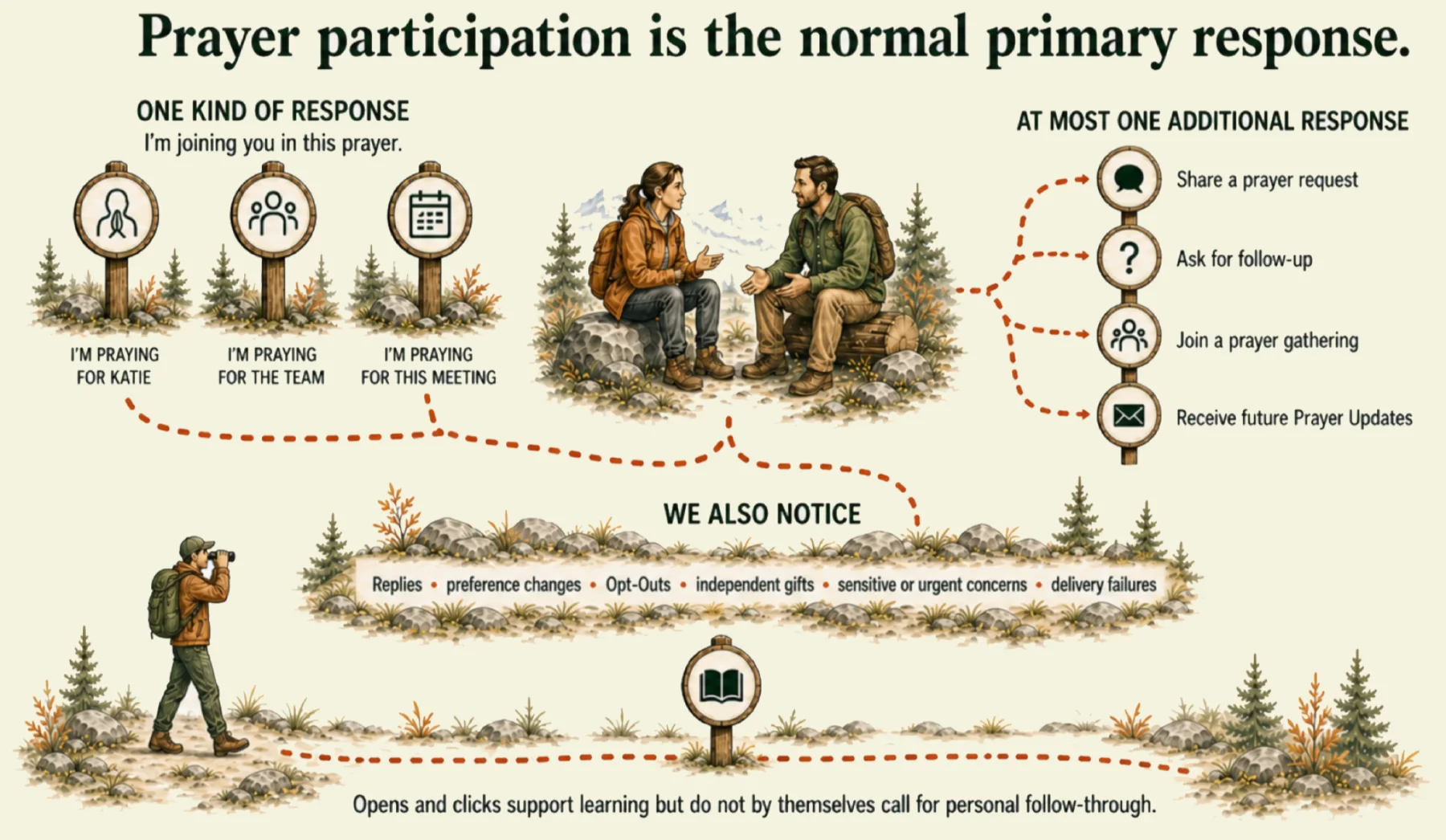
Prayer participation is the normal primary response. Each request may offer a specific choice such as:
I'm praying for Katie • I'm praying for the team • I'm praying for this meeting
Together, those choices are one kind of response: I'm joining you in this prayer.
A normal email may include at most one additional response that naturally fits:
share a prayer request • ask for follow-up • join a prayer gathering • receive future Prayer Updates
We also notice replies, preference changes, Opt-Outs, independent gifts, sensitive or urgent concerns, and delivery failures. Opens and clicks support learning but do not by themselves call for personal follow-through.
Stage 6 of 7
Next Action
What do we do next?
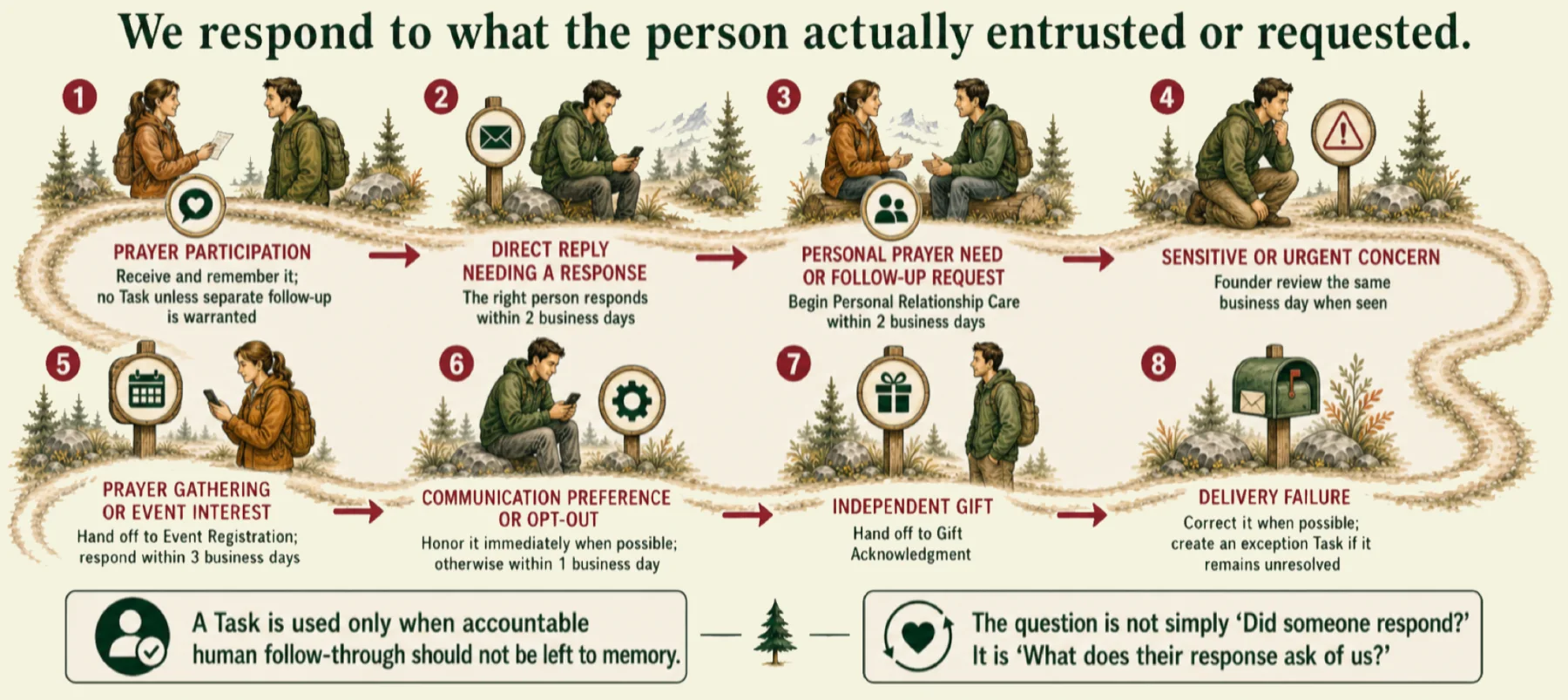
We respond to what the person actually entrusted or requested.
| What happened | What happens next |
|---|---|
| Prayer participation | Receive and remember it; no Task unless separate follow-up is warranted |
| Direct reply needing a response | The right person responds within 2 business days |
| Personal prayer need or follow-up request | Begin Personal Relationship Care within 2 business days |
| Sensitive or urgent concern | Founder review the same business day when seen |
| Prayer gathering or event interest | Hand off to Event Registration; respond within 3 business days |
| Communication Preference or Opt-Out | Honor it immediately when possible; otherwise within 1 business day |
| Independent gift | Hand off to Gift Acknowledgment |
| Delivery failure | Correct it when possible; create an exception Task if it remains unresolved |
A Task is used only when accountable human follow-through should not be left to memory.
The question is not simply “Did someone respond?” It is “What does their response ask of us?”
Stage 7 of 7
Learn
What do we carry forward?
We review after 3 business days and again after 7 calendar days. Urgent concerns are reviewed the same business day.
We watch:
prayer participation • what people entrust to us • follow-up and Tasks • preferences and Opt-Outs • delivery problems • prayer outcomes and closed loops
Opens and clicks are supporting context. Donations are not the primary measure. What we learn helps us communicate with greater relevance, care, and faithfulness the next time.
Relational Takeaway
Prayer Update is not simply how Proxima tells people what to pray about. It is how we invite people into prayer, listen when they respond, and faithfully respond to what they entrust to us.